Counselling & Psychotherapy for Gifted and Talented Adults
Giftedness in adulthood is often characterized by a qualitatively different experience of the world compared to neuro-typical peers, leading to unique psychological challenges that specialized counselling can address.
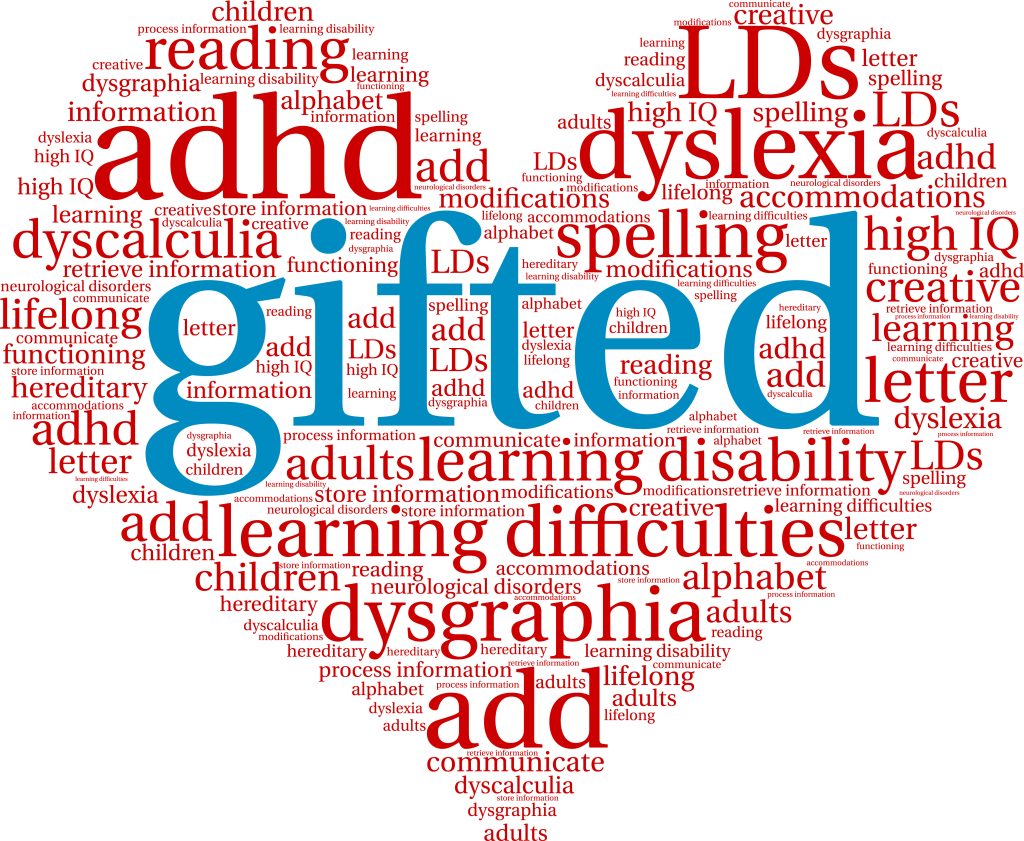
Understanding the Gifted Adult Experience
Many gifted adults go through life feeling at odds with their environment without knowing why. Common characteristics and resulting challenges include:
-
Intensity and Overexcitabilities (OEs): Based on the work of psychiatrist Kazimierz Dabrowski, the Theory of Positive Disintegration (TPD) suggests that the intensified way gifted individuals experience the world (intellectually, imaginatively, emotionally, sensually, and psychomotorically) can lead to internal psychic pressure and emotional turbulence. This “disintegration” is viewed as necessary for higher-level personality development and authenticity.
-
Asynchronous Development: The difference between a gifted adult’s intellectual, emotional, and physical development can lead to feeling “out of sync” with peers, contributing to a sense of isolation and loneliness.
-
Multipotentiality: Having many interests and abilities can result in difficulty prioritizing a single career path, leading to feelings of being overwhelmed or underachieving.
-
Perfectionism and High Standards: Gifted individuals often set exceptionally high standards for themselves, which can result in low self-esteem (despite high self-confidence), guilt, self-criticism, and existential anxiety or depression regarding their responsibility to use their talents fully.
-
Misdiagnosis Risk: Uninformed professionals may pathologize thoughts, feelings, and behaviors typical of giftedness (e.g., intense emotions, rapid thought, existential concerns), leading to inappropriate mental health diagnoses.
-
Twice-Exceptionality (2e): Individuals who are gifted and also have one or more learning differences or psychiatric diagnoses (like ADHD or anxiety) face even more complex needs.
Core Principles for Counselling Gifted Adults
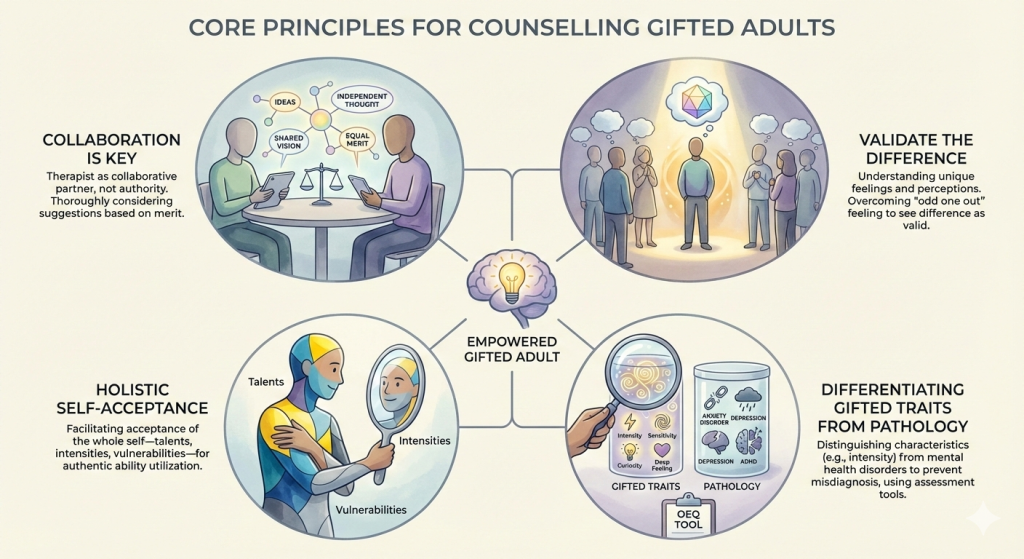
Collaboration is Key: Gifted adults are independent thinkers with an internal locus of control. The therapist serves as a collaborative partner, not an authority figure, thoroughly considering suggestions based on their merits.
Validate the Difference: Help the client understand that their feelings, perceptions, and thoughts, while different from the majority, are valid and can be understood by others. This is essential for overcoming years of feeling like the “odd one out.”
Holistic Self-Acceptance: The work involves facilitating the gifted person’s acceptance of their whole self—talents, intensities, and vulnerabilities—freeing them to utilize their abilities authentically.
Differentiating Gifted Traits from Pathology: A counselor must be able to distinguish characteristics associated with giftedness (like intensity or high sensitivity) from actual mental health disorders to prevent misdiagnosis. Tools like the Overexcitability Questionnaire (OEQ) may be used for assessment.
Overexcitabilities (OEs) and the Theory of Positive Disintegration (TPD)
Overexcitabilities (OEs) and the Theory of Positive Disintegration (TPD) are foundational to understanding the gifted experience, treatment is less about “curing” intensity and more about integration, mastery, and leveraging these traits for growth.
My therapeutic goal is to help the gifted adult understand that their intense experiences are normal for their neurotype and provide tools to manage their impact, thus transforming “disintegration” into positive growth.
1. Psychoeducation and Relabeling (Dabrowski’s TPD)
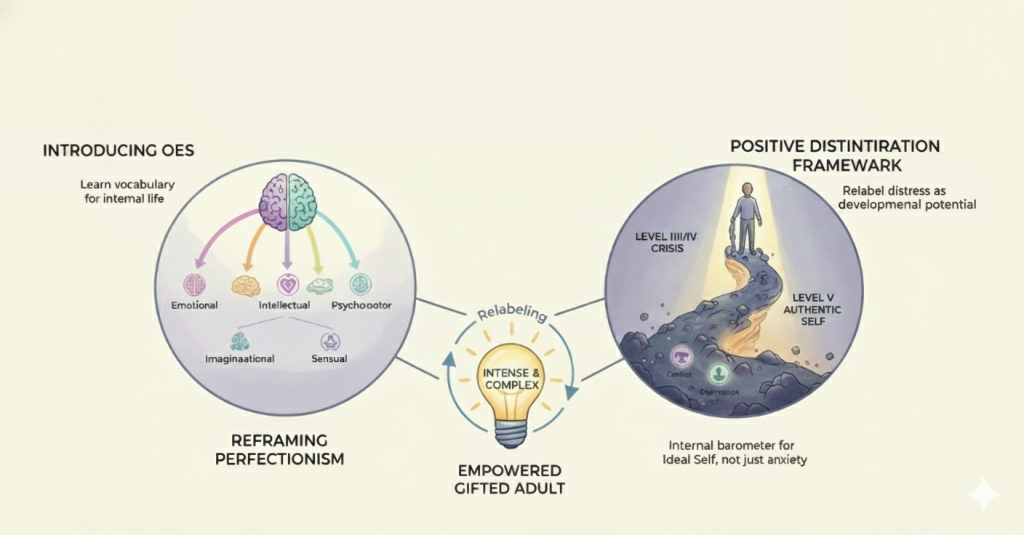
Treatment Goal: Validation and shifting the client’s self-perception from “broken” or “too much” to “intense” and “complex.”
Examples:
Introducing OEs: Educating the client about the five forms of Overexcitability (Emotional, Intellectual, Imaginational, Sensual, Psychomotor) and identifying which ones are dominant for them. This provides a vocabulary for their internal life.
The Positive Disintegration Framework: Explaining that internal conflict, anxiety, and deep depression are often manifestations of TPD’s Level III or IV—a necessary crisis that precedes the development of a higher, more authentic self (Level V). The therapist helps the client relabel their distress as a sign of developmental potential.
Reframing Perfectionism: Reframing unrealistic expectations and self-criticism (often linked to high Intellectual OE) as a powerful internal barometer for their own Ideal Self, rather than merely a source of anxiety.
2. Emotional Regulation and Integration
Treatment Goal: Developing non-avoidant coping mechanisms for the intensity of Emotional OE.
Examples:
Emotional Mapping: For highly intense emotional experiences, the client tracks the cause, duration, and physiological impact of an emotion to move from a feeling of being overwhelmed by the emotion to being an observer of the emotion.
Radical Acceptance of Intensity: Encouraging the client to stop fighting the intensity itself. If they experience existential dread, instead of suppressing it, they may be guided to channel that energy into philosophical inquiry, creative output, or advocacy work.
Mindfulness and Body-Based Work: Techniques to anchor the client when the Psychomotor OE makes them feel restless or anxious, or when Sensual OE leads to sensory overload. Examples include grounding exercises or focusing on the physiological manifestation of the emotion (e.g., “Where in your body do you feel the sadness?”).

3. Channeling and Mastery Goals
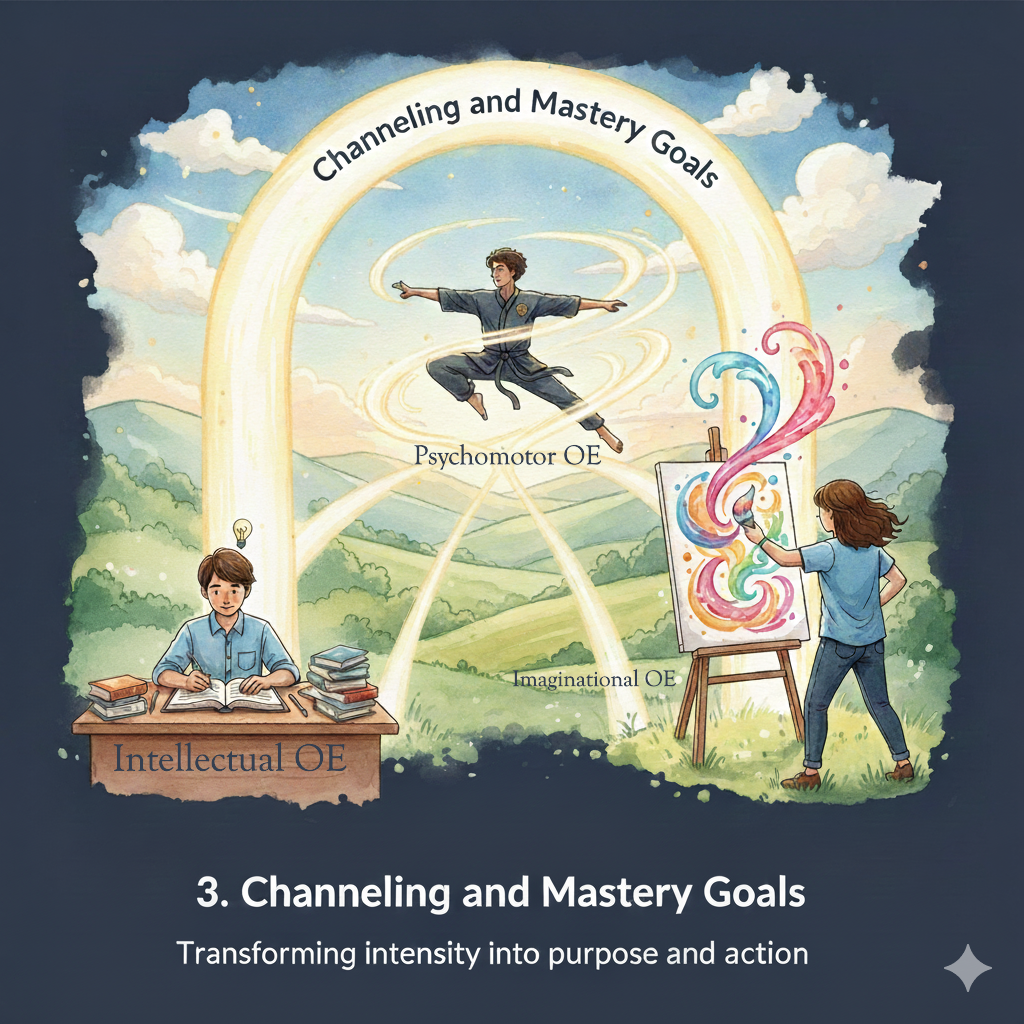
Treatment Goal: Providing appropriate outlets for Intellectual, Imaginational, and Psychomotor OEs to prevent internal pressure buildup.
Examples:
Divergent Thinking Homework: Assigning creative or intellectual tasks that require complexity and depth to satisfy the Intellectual OE. This might be researching a new field, writing a detailed analysis, or engaging in complex strategic games.
“Appropriate Action” for Psychomotor OE: Guiding the client to use their excess energy purposefully, such as through intense exercise, martial arts, or physical labor, rather than having it manifest as nervous habits or procrastination.
Creative Outlet for Imaginational OE: Encouraging the use of creative arts (writing, music, drawing) to externalize the often-vivid and overwhelming internal fantasy life, making it a source of fuel rather than distraction.
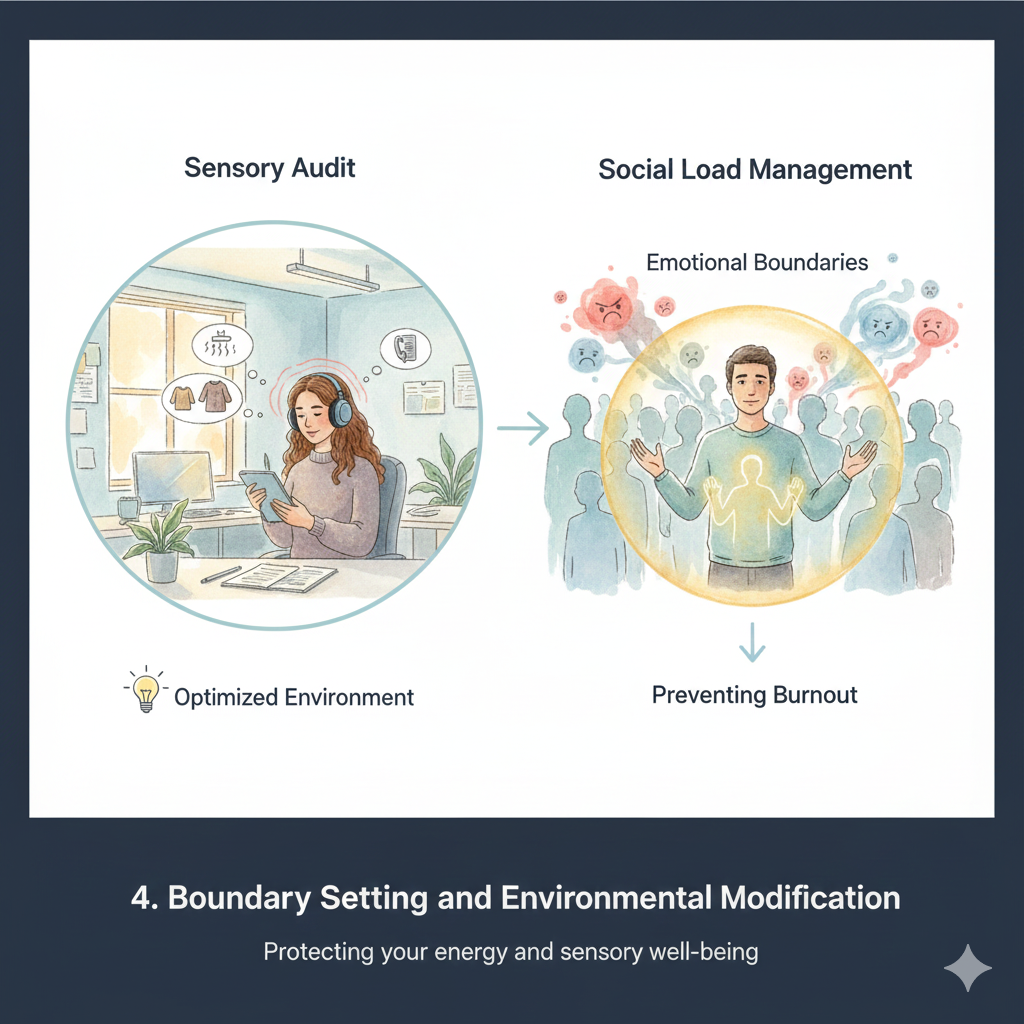
4. Boundary Setting and Environmental Modification
Treatment Goal: Managing the impact of Sensual OE and the drain caused by social environments.
Examples:
Sensory Audit: Helping the client identify specific environmental triggers (e.g., bright lights, loud noises, scratchy fabrics) and collaboratively creating a plan for environmental modification (e.g., using noise-canceling headphones, optimizing workspace lighting).
Social Load Management: Recognizing that high Emotional OE can lead to taking on the feelings of others. Therapy focuses on teaching the client to establish firm emotional and social boundaries to protect their energy and prevent burnout.
Giftedness and Autism Spectrum Challenges (Twice-Exceptionality/2e)
When giftedness co-occurs with Autism Spectrum Disorder (ASD), including Asperger’s Syndrome (now part of the ASD diagnosis), the individual is referred to as Twice-Exceptional (2e). This combination creates a unique and complex profile where the gifts can mask the autistic challenges, and the autistic traits can impede the expression of the gifts, leading to immense internal confusion and frustration.
Specific Challenges for Gifted Autistic Individuals
The intensity of gifted traits (Overexcitabilities) often interacts problematically with the core features of ASD:
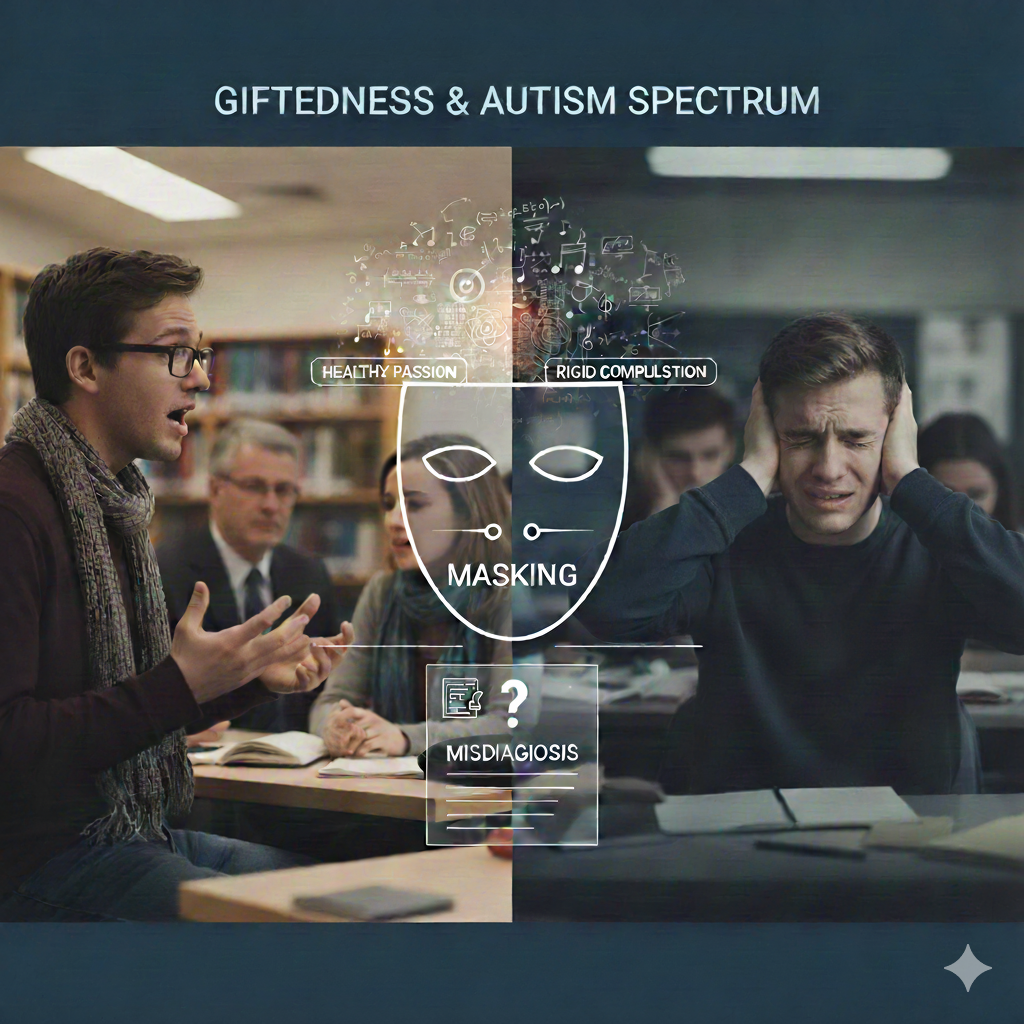
1. Masking and Misdiagnosis
Verbal Fluency: High Intellectual Overexcitability (OE) can result in superior vocabulary, abstract reasoning, and intense verbal articulation. This often masks social difficulties, making professionals overlook the communication and social cues deficits typical of ASD.
Intense Interests: The passionate, deep, and focused interest common to Intellectual OE (Dabrowski) can look indistinguishable from the restricted, repetitive patterns of behavior, interests, or activities characteristic of ASD. This similarity makes it difficult for the individual to determine if their focus is healthy passion or rigid compulsion.
Sensory Issues: The extreme sensory sensitivity of Sensual OE in giftedness overlaps significantly with the sensory processing challenges inherent in ASD, leading to extreme distress in common environments (e.g., classrooms, offices).
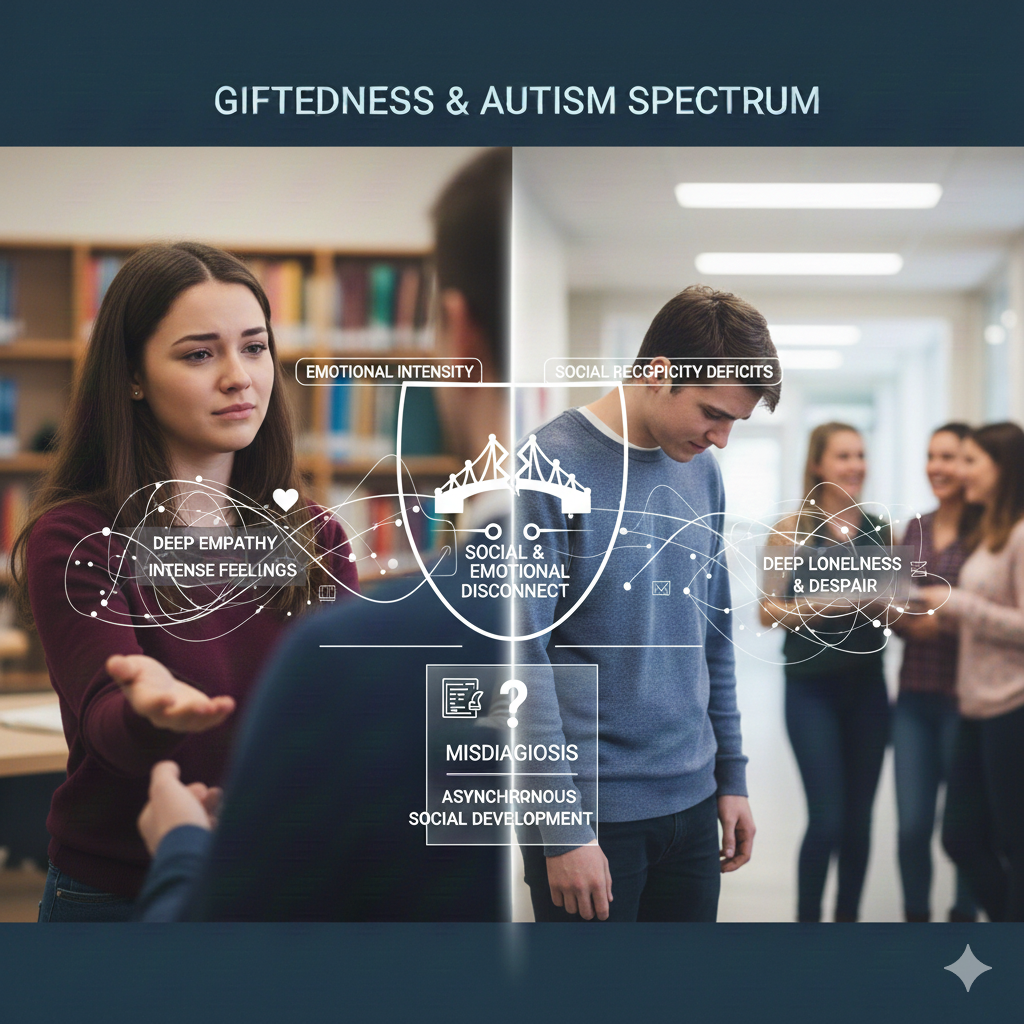
2. Social and Emotional Disconnect
Emotional Intensity vs. Social Reciprocity: High Emotional OE leads to deep empathy and intense feelings, yet the ASD trait of difficulty with social-emotional reciprocity and reading non-verbal cues can leave the individual unable to effectively express or use that empathy in a socially appropriate way. This often leads to deep loneliness and despair.
Asynchronous Social Development: The gifted 2e individual may be able to discuss complex philosophical concepts with adults but may be unable to navigate the simplest social rules among peers, contributing to feeling perpetually alienated and misunderstood.
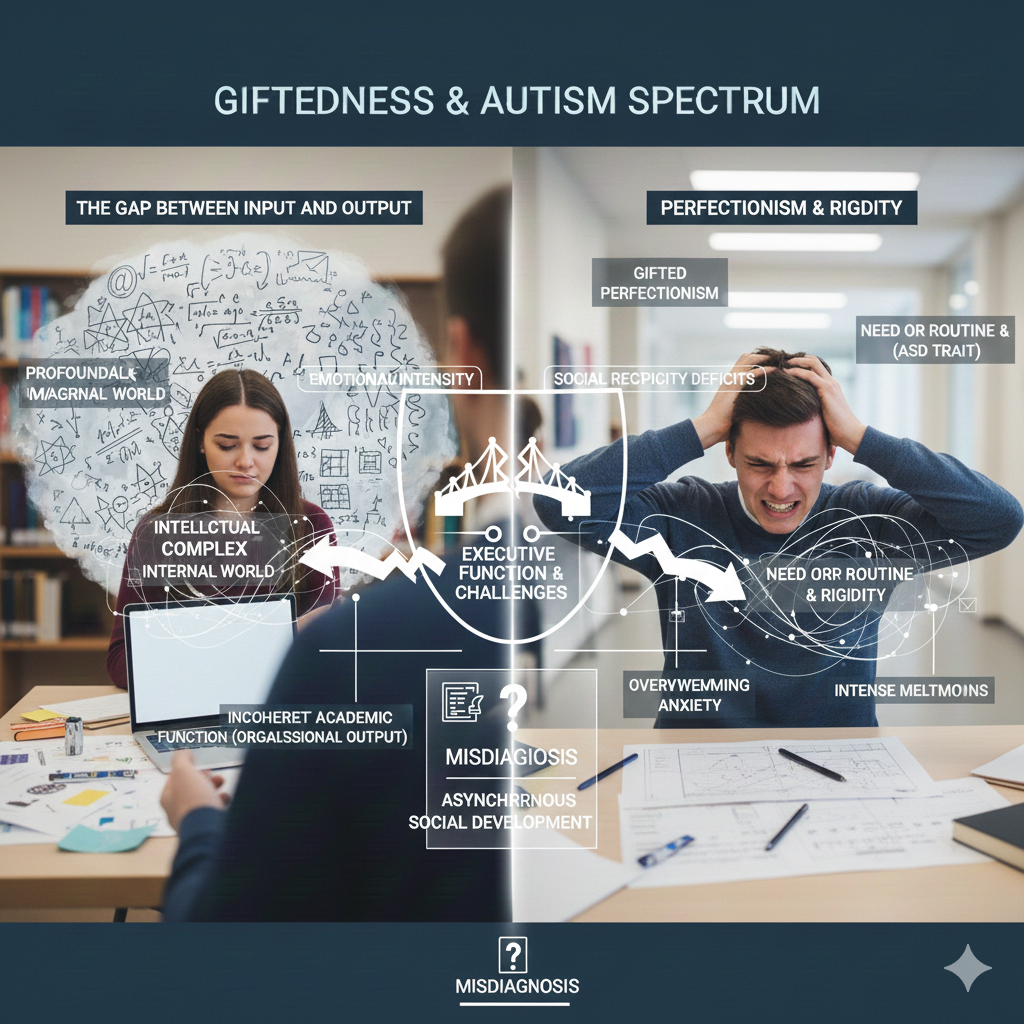
3. Executive Function and Output
The Gap between Input and Output: While the individual may have a profoundly complex and insightful internal world (high Intellectual and Imaginational OEs), deficits in executive function (organization, planning, initiation, shifting attention) often associated with ASD can make it nearly impossible to translate that complexity into coherent academic or professional output.
Perfectionism and Rigidity: Extreme gifted perfectionism combined with the need for routine and rigidity (ASD trait) can result in overwhelming anxiety, task paralysis, or intense meltdowns if things do not go exactly as planned.
The Unique Challenges of Gifted Women
Gifted women and girls often face a profound internal conflict between their advanced capabilities and societal gender expectations, leading to unique psychological challenges. Research highlights that gifted women frequently struggle with intense Imposter Syndrome, the constant fear of being “found out” as a fraud, despite overwhelming evidence of their success. This is often compounded by the “Good Girl Conditioning” or the societal pressure to prioritize relationships and nurturing roles (The Ethic of Caring) over their own ambitious, autonomous pursuits, leading them to unconsciously push away success or hide their intellectual intensity (Intellectual OE) to avoid being seen as intimidating or threatening to peers and partners. This internal and external pressure can result in chronic underachievement, severe perfectionism, and a higher propensity for anxiety and existential depression stemming from the dissonance between who they are and who they feel they are expected to be.

FAQs
Why do gifted individuals need specialised counselling?
Giftedness isn’t just about high IQ; it’s a different way of experiencing the world. Gifted individuals often process information more deeply and feel emotions more intensely. Traditional counselling might misdiagnose “intensity” as ADHD or “deep questioning” as depression. A specialised counsellor understands the nuances of the gifted profile.
What is "Asynchronous Development"?
This is the hallmark of giftedness. It means that a person’s intellectual, emotional, and physical development may not be in sync. For example, a 7-year-old might have the math logic of a 14-year-old but the emotional regulation of a typical 5-year-old. This gap often leads to internal frustration and external misunderstandings.
What are "Overexcitabilities" (OE)?
Developed by Kazimierz Dabrowski, these are heightened sensitivities in five specific areas. Gifted individuals often experience one or more of these with extreme intensity:
Psychomotor: Surplus of energy, rapid speech, or physical restlessness.
Sensory: Heightened awareness of sights, smells, sounds, or textures.
Intellectual: An insatiable thirst for knowledge and truth.
Imaginational: Vivid dreams, metaphors, and inventive thinking.
Emotional: Deep capacity for empathy, strong attachments, and acute sensitivity to injustice.
Why is perfectionism so common in gifted children?
When things come easily to a child early on, they may develop a “fixed mindset.” They begin to believe they are only valuable if they are “the best.” When they finally encounter something difficult, they may experience a “paralysis of high expectations,” leading them to avoid risks to protect their identity as “smart.”
Why do gifted people often feel like "outsiders"?
Finding “intellectual peers” can be difficult. A gifted child may struggle to relate to age-mates who don’t share their complex interests or vocabulary. This can lead to existential depression—even at a young age—as they grapple with big questions about mortality, justice, and the meaning of life.
What does "Twice-Exceptional" (2e) mean?
A 2e individual is someone who is gifted but also has a learning difference or disability, such as dyslexia, ADHD, or autism. Their giftedness can often “mask” their disability, and vice versa, leading to them being overlooked for support in both areas.
Why do some gifted students underachieve?
Underachievement is rarely about laziness. It is often a defense mechanism. It can stem from:
Boredom: The curriculum lacks the depth or pace they require.
Fear of Failure: If they don’t try, they can’t “fail” at being smart.
Social Masking: Downplaying intelligence to fit in with peers.
How can I support a gifted person at home?
Validate their intensity: Instead of saying “you’re too sensitive,” acknowledge that their feelings are real and powerful.
Focus on the process, not the result: Praise effort, strategy, and resilience rather than “being smart.”
Allow for “down time”: Gifted brains need time to decompress from the constant sensory and intellectual input of the day.